
How to identify the Asian hornet
Learn how to tell the Asian hornet apart from the common wasp
The Asian hornet, also known as the yellow-legged hornet, is an invasive species that has spread across various parts of Europe in recent years. Its presence can be particularly problematic during the months of peak activity, when nest building and foraging increase.
Buthow do you identify an Asian hornet and distinguish it from other wasp species? Knowing its key characteristics is essential for recognizing it and exercising caution.
What does an Asian hornet look like?
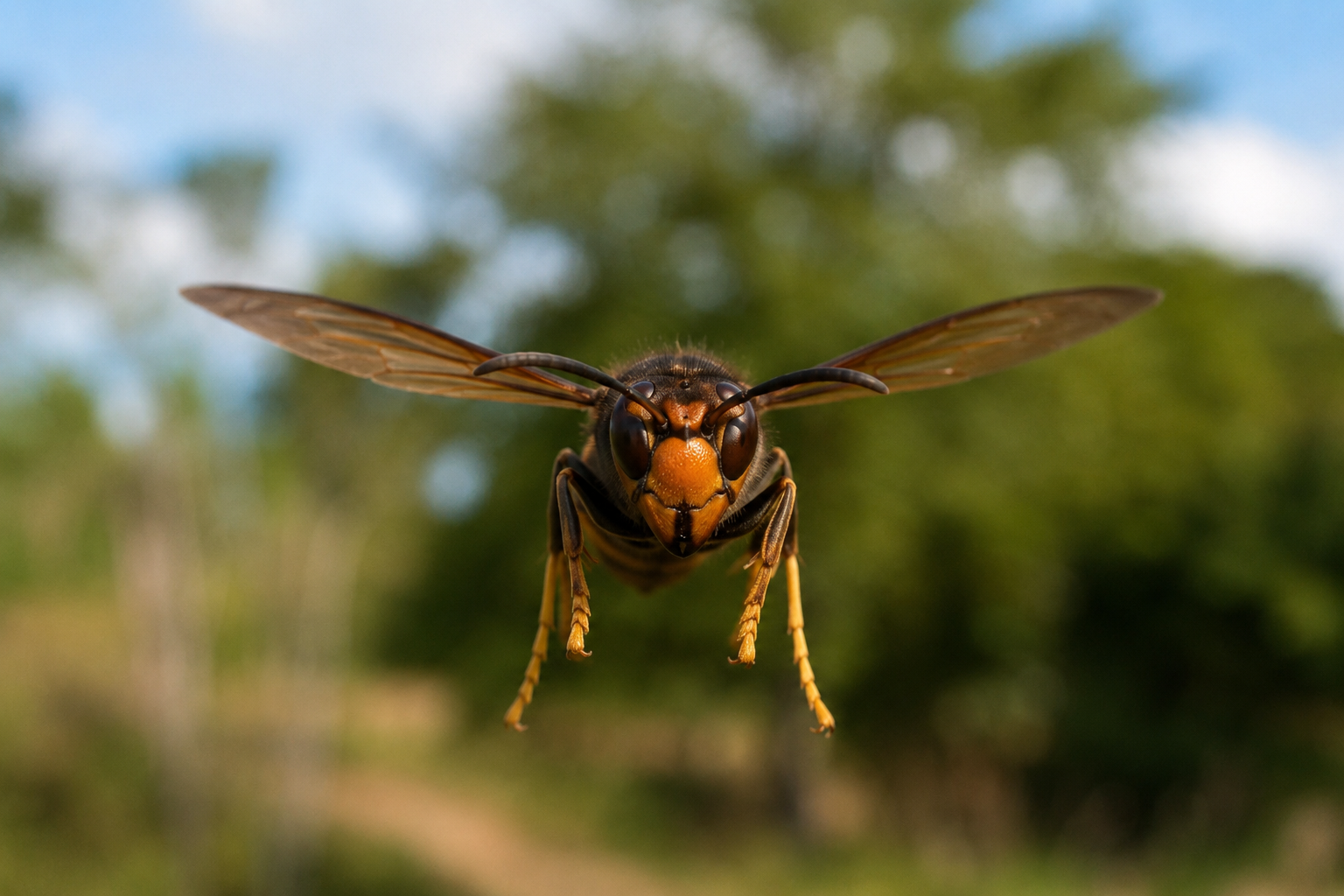
One of the main characteristics of the Asian hornet is its dark appearance. Unlike other common wasps, it has a predominantly black or very dark brown coloration.
Its most recognizable features include:
- A dark thorax, which is almost entirely black.
- A dark abdomen, with a highly visible yellow-orange band towards the rear.
- Yellow fourth abdominal segment, one of the features that can help identify it.
- Dark head, with the frontal area and part of the face in yellowish or orange tones.
- Dark legs with yellow tips, a particularly striking feature when the insect is perched.
- It can reach approximately 3 centimeters in length, although dimensions may vary.
Its size and characteristic color pattern make it distinguishable from other species when observed up close.
How can you tell a Asian hornet apart from a common wasp?
One of the most common questions is how to distinguish the Asian hornet from other wasps. The most obvious difference is the color combination.
While many common wasps have an abdomen with several yellow and black stripes, the Asian hornet has a much darker body, with a single prominent yellow-orange stripe on the rear of the abdomen.
In addition, their legs feature a distinctive combination of dark and yellow coloring at the tips.
If you find a specimen and are unsure if it is a velutina, do not try to catch it or get unnecessarily close. Observing its characteristics from a safe distance is the most recommended option.
Where can we find the Asian hornet?
The Asian hornet can appear in both rural and urban areas. It is common to find them near gardens, wooded areas, crops, parks, and places where they can find water and food.
During the peak season, they can also be seen around fruit trees, flowers, beehives, or areas with a high presence of insects.
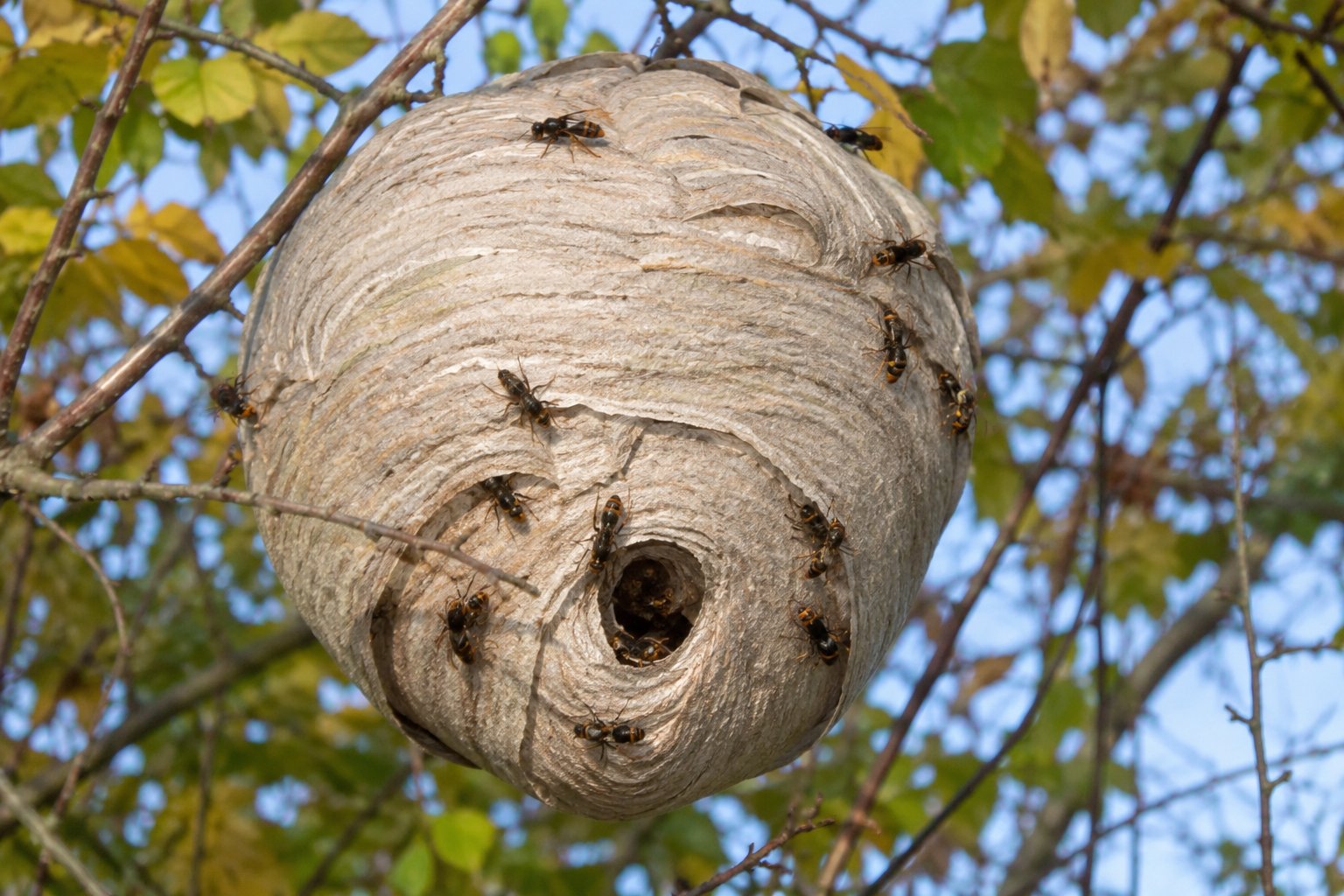
One of the main signs of their presence is the appearance of a nest. Secondary nests are usually built in high places, such as trees, although they can also be found in structures, roofs, sheds, or other spaces.
What to do if you find a nest?
If you spot a possible Asian hornet nest, do not approach it or attempt to remove it yourself. Being close to the nest can trigger a defensive response from the hornets.
The best course of action is to keep a safe distance and notify the appropriate services or authorities in your area so they can assess the situation.
For occasional encounters with individual hornets, having a specific insecticide on hand can help you act more safely, always following the usage instructions and maintaining the recommended distance.
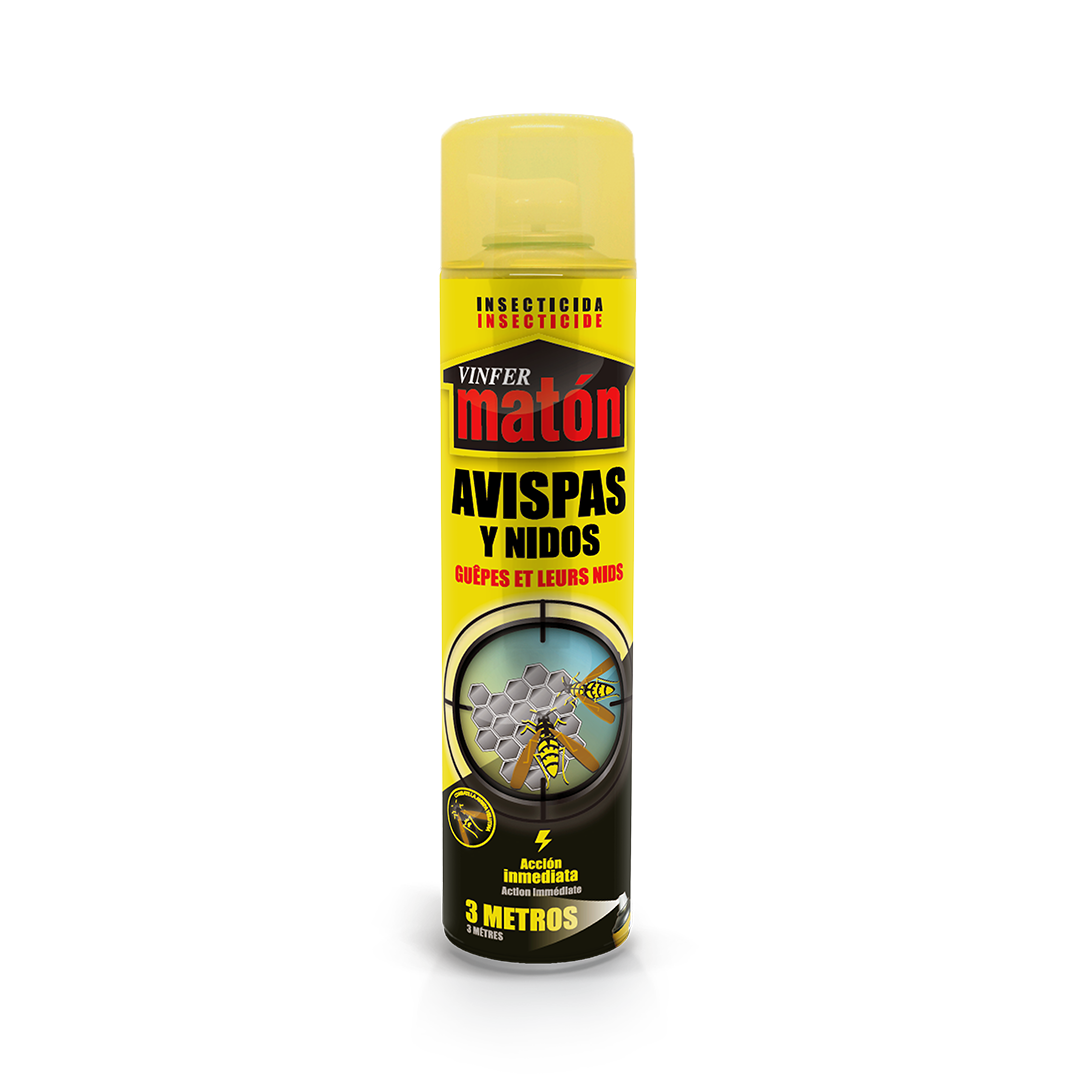
Vinfermatón Wasp: protection against the Asian hornet
If you are looking for an effective solution to combat wasps, our wasp insecticide Vinfermatón Wasp is specially designed to act against these insects. Its long-range format allows you to maintain a greater distance during application.
Remember: correctly identifying the insect is the first step. And if you find a nest, always keep your distance and contact the specialized services in your area.
Latest news
News, tips and much more